Just because you can download it, doesn't mean you should!
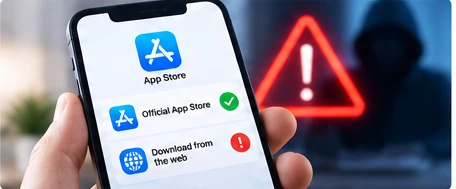
Could changes to Apple's App Store in Australia make downloading apps more risky?
Before I start, I should point out that some of what follows is my personal opinion. Others may have different views, and that's perfectly fine. However, having worked with Apple products and helped customers with their devices for many years, I feel this is something worth discussing.
Secondly, this is a fairly long article. There's quite a bit to cover, and I think it's important to explain the background rather than just say something is changing.
First, a little background about Apple's App Store
For those who aren't familiar with how Apple's App Store works, it's the place where you download apps for your iPhone or iPad.
One of the important things about Apple's App Store is that apps are reviewed before they're made available to the public.
Apple has rules about what apps can do, what information they can access, and how they interact with your device.
For example, an app shouldn't be able to access your contacts or photographs without requesting the appropriate permission. Apple also has restrictions designed to prevent apps from downloading and running unauthorised code, or doing things they haven't disclosed.
And if Apple discovers an app that's behaving maliciously, it can remove that app from the App Store and, in certain circumstances, prevent it from operating on devices.
The idea behind all these measures is fairly simple: security, privacy and protection for the customer.
Now, does that mean every app in Apple's App Store is completely safe? Of course not. No security system is perfect, and occasionally something slips through.
But it does provide an important layer of protection that most people probably don't even realise is there.
An interesting example from 2011
Back in 2011, a security researcher named Charlie Miller managed to get a seemingly harmless stock market app called InstaStock approved for Apple's App Store.
What Apple didn't initially realise was that the app contained hidden functionality that allowed it to contact Miller's own server, download additional code and run it on the iPhone without Apple's approval.
This vulnerability could potentially have been used to access personal information, including contacts and photographs.
Miller wasn't trying to steal or sell anyone's information. He was demonstrating a security flaw in Apple's system.
However, once he publicly revealed what he'd done, Apple responded swiftly. Within hours of the vulnerability being made public, Apple had terminated his developer account, and the app was removed from the App Store.
I find this an interesting example for two reasons.
Firstly, it shows that even Apple's App Store review process isn't perfect.
But secondly, it demonstrates that Apple takes its security rules seriously and can act very quickly when a problem is discovered.
You can read more about this incident in the original MacRumors article from November 2011.
How much does Apple actually protect its customers?
This brings me to something else I found interesting.
In May 2026, Apple published information about the amount of potentially fraudulent activity it had prevented through its App Store during 2025.
According to Apple, it prevented more than US$2.2 billion in potentially fraudulent transactions during that year alone.
Apple also reported rejecting more than two million problematic app submissions and blocking more than 1.1 billion fraudulent account creation attempts.
Now, to be clear, this doesn't mean customers would necessarily have lost all that money without Apple's intervention. These are Apple's figures for activity it identified and prevented.
But I still think they're pretty significant numbers.
They give us some idea of the work happening behind the scenes to protect customers, much of which the average person probably never sees.
You can read Apple's full report here.
So why is the App Store changing in Australia?
For many years, there have been arguments about Apple's control over the App Store.
Some people and companies believe Apple has too much control over how apps are distributed, what developers can charge, and how payments are processed.
They argue that customers and developers should have more choice, including being able to download apps from alternative app stores or directly from websites.
Others, including Apple, argue that having a controlled App Store provides important security and privacy protections.
Personally, I've always leaned towards Apple's approach.
I appreciate that some developers want more freedom, and that competition can potentially bring benefits, including lower prices.
But I've also felt that when you buy an iPhone, you're buying into a particular system that Apple has designed, including the protections that come with it.
And if someone prefers a more open system, there are other brands of phones available.
That's my personal opinion, of course, and I know not everyone will agree. The legal questions about market power and competition are more complicated than simply having other phone brands to choose from.
However, there's now been an important development here in Australia.
On 22 October 2026, the Federal Court of Australia made orders requiring Apple to permit alternative app stores, direct app downloads from websites, and alternative payment methods on Australian iPhones.
This followed an earlier judgment in August 2025, in a case involving Epic Games, the company behind Fortnite.
Apple has been given until 1 March 2027 to implement the changes, although there's provision to request an extension. Apple has announced that it intends to appeal and seek to have the orders paused.
Importantly, the court hasn't required Apple to abandon security altogether. It has allowed security scanning and notarisation requirements for apps distributed outside the App Store.
However, Apple would no longer have the same exclusive control over where customers obtain their apps.
You can read more about the Australian decision here:
- ABC News – the Australian court decision
- MacRumors – Apple ordered to open iPhone to rival App Stores
- Gilbert + Tobin – legal analysis of the Federal Court orders
So why am I concerned about this?
This is where I start looking at things from the perspective of the average iPhone or iPad user.
At the moment, when someone wants an app, they generally open the App Store, search for it, download it, and start using it.
They don't necessarily need to understand how the app works, what code it uses, or what security checks Apple has performed.
And that's one of the things I've always liked about Apple's approach.
It keeps things relatively simple.
Now, imagine a situation where apps can also be downloaded from other app stores or websites.
Someone might receive an email or text message telling them they need to download a particular app, or update an existing one.
They click the link, arrive at a website that looks genuine, and download what they believe is the correct app.
But what if it isn't?
What if it's a fake app, designed to look like the real thing?
Or what if it contains malicious code designed to collect personal information, trick someone into entering banking details, or steal information?
Yes, there would still be security protections in place, including Apple's operating-system safeguards and the scanning requirements allowed by the court.
But I do wonder whether having more places to download apps could make things more confusing for everyday users, and potentially create more opportunities for scammers.
And scammers are already very good at making things look legitimate!
What happens when something goes wrong?
Here's another part that concerns me.
Imagine someone downloads an app from a third-party website, thinking it's legitimate.
They use it, and later discover that money has disappeared from their account or that personal information has been stolen.
Who do they contact?
Apple? The developer? The company operating the alternative app store? Their bank?
And who would actually be responsible?
I don't know exactly how those situations would play out, and it would depend on the circumstances.
But I can imagine someone contacting Apple for assistance, only to discover that the app wasn't downloaded through Apple's own App Store and that Apple has limited control over the company distributing it.
That could make things considerably more complicated for the customer.
And let's face it, when someone has lost money or had their personal information stolen, the last thing they want is to be passed from one company to another trying to work out who's responsible.
What should you do?
For now, nothing needs to change in the way you download your apps.
And even if these changes do go ahead, my recommendation would still be to use Apple's official App Store wherever possible.
That's not to say every app outside Apple's App Store would be dangerous. There are plenty of legitimate developers, and alternative app stores may offer perfectly safe applications.
But for the average person, I believe sticking with the official App Store will remain the simplest and most straightforward option.
I'd also suggest being particularly careful if an email, text message, website or even a phone call tells you that you need to download or install an app from somewhere unfamiliar.
Don't automatically trust a link just because it looks professional or appears to come from a company you recognise.
And if you're unsure, ask someone before installing it.
It's also worth having a conversation with family members, particularly those who may not be as familiar with how these things work.
Will more people lose money to fraudulent apps?
This is something I'll be interested to watch over the coming years.
Apple already reports preventing billions of dollars in potentially fraudulent transactions through its App Store.
If alternative app distribution becomes available in Australia, will we eventually see an increase in scams involving fake or malicious apps?
Or will the security checks and protections that remain in place be enough to prevent that?
At the moment, we simply don't know.
And I think it's important not to assume that allowing alternative app stores will automatically result in more fraud.
But given how sophisticated online scams have become, I do feel it's a genuine concern worth keeping an eye on.
My final thoughts
Personally, I still hope Apple succeeds in its appeal and can retain its existing App Store model in Australia.
I've always felt that Apple designing the hardware, operating system, App Store and security protections as one integrated system has been one of the strengths of the iPhone and iPad.
I understand the arguments about competition, developer fees and giving people more freedom.
But I also think there's something valuable about having a system that aims to make things simpler and safer for everyday users.
And that's the part I worry we might gradually lose.
Of course, the court has made its decision, Apple is challenging it, and we'll have to see what happens next.
I'll continue following developments and will update this Insights article and the MacWizardry newsletter as more information becomes available.
In the meantime, my advice remains pretty simple:
Just because you can download an app, doesn't mean you should.
Editor's note: This article was originally written by me, based on my own opinions and experiences. AI was used to help with editing, wording and formatting to make it easier to read. The views expressed are entirely my own.